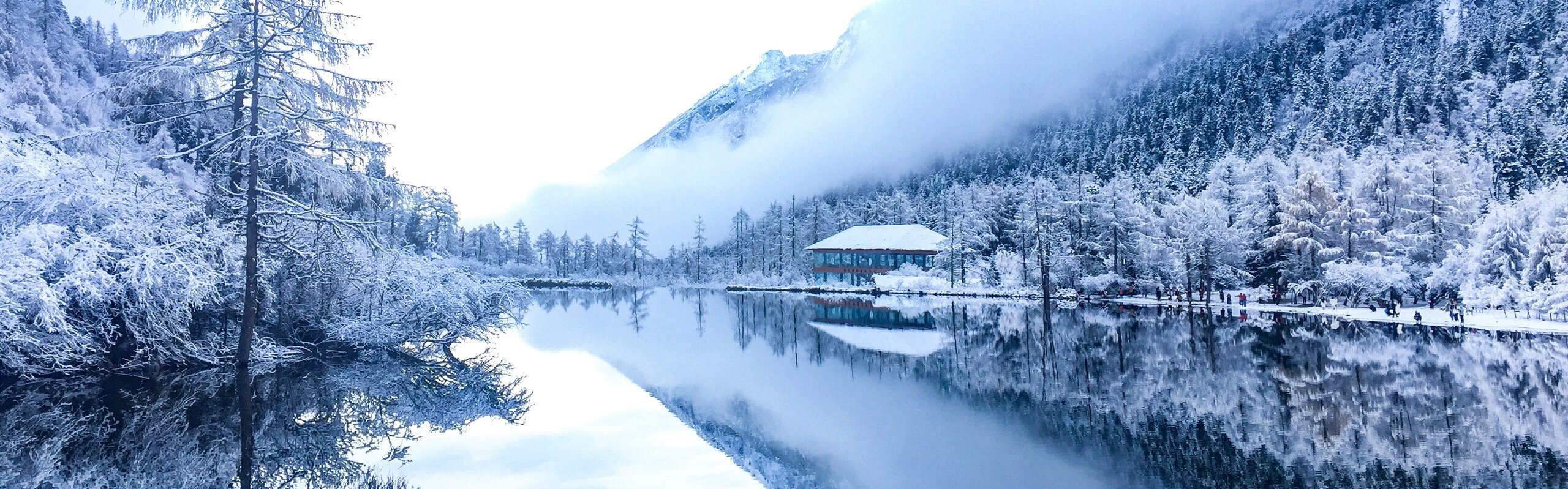

The weather in Sichuan varies greatly from west to east. It is a big province — about the size of Spain or California, but the province is divided into three major geographical regions.
There is a region of high mountains in the south, a high plateau in the west, and a lowland region in the eastern part of the province. The whole province is impacted by the Southeast Pacific Ocean Monsoon and the Southwest Indian Ocean Monsoon. Here is a description of the weather in the three regions.
1. Weather in Eastern Sichuan's Lowlands
The eastern basin area is warmer than the higher elevations, but often cloudy or foggy. To give you an example of how cloudy the basin area is, Chengdu lies in the basin area and people compare Chengdu's weather to that of London and say that it is even cloudier.
This area has a subtropical monsoon climate. It is fairly cold in the winter, dry in the spring, hot in the summer, and rainy in the autumn. The average daytime temperature in January is 5-8°C (41-46°F). The average daily temperature in July is 25-29°C (77-84°F). There are 250 to 300 cloudy and rainy days a year in the plain.
The average temperature in Chengdu in January is about 6°C (43°F), and in July it is about 25°C (77°F). In Chengdu, the rainy season extends from May through September, and the dry season extends from October through April.
See more on Chengdu Weather including daily forecasts.
2. Weather in Western Sichuan's High Plateau
 Mount Siguniang in Sichuan
The high plateau in the west is typical of high plateaus: there is a long winter, a cold summer, but lots of sunshine. The temperature drops during the night. In contrast to the basin, parts of the plateau may bask in 2,500 hours of sunshine a year. Ganzi Township is nicknamed "the small sunshine city".
The climate is alpine and even arctic in the highest peaks. The Huanglong Scenic and Historical Interest Area has a glacier. The high mountains southwest of Chengdu are good places to go in the summer. Huanglong is a beautiful place to visit in the summer.
3. Weather in Southern Sichuan's Mountains
The climate in the high mountain region in the south of course depends on the altitude. The valley of the Jinsha River (Yangtze) has a subtropical climate. In the valleys, the dry season and the rainy season are obvious. May to September is the wet season, and October to April is the dry season.
Best Times to Visit Sichuan
Most of the cities in Sichuan are located in the Sichuan Basin, which is in the eastern lowlands. This area has a relatively pleasant climate for touring all year round. The best times to visit the area are spring and autumn. For some cities in the western high plateau, such as Kangding, Ganzi, and Daocheng, summer is also one of the best times to visit.
We'll give you information about the features and recommended places to visit for each season below. You can choose according to your preferences. The best time to visit depends largely on what you want to see and which part you want to go to.
Spring (March to Early May)
- Temperature: It ranges from 8–24°C (46–75°F) in Chengdu, from 0–8°C (32–46°F) on Mount Emei, and from 9–18°C (48–64°F) in Jiuzhaigou.
- Good to know: It is still fairly cold in early March. The temperature differences are big in the cities in the eastern lowlands and there will be some rain. In Western Sichuan and the mountainous areas, it is still winter.
- Items to prepare: Take long-sleeved clothes and a thin jacket with you. In Western Sichuan and the mountainous areas, you need to take a down jacket with you.
Recommended Activities
Giant Panda- See giant pandas: Spring is one of the best times to see pandas as they are lazy on hot days and like to cool off in air-conditioned rooms. Read: The Top 4 Places to See Giant Pandas in China.
- Take a Chengdu city tour: Spring is in the shoulder season and you can travel freely around the city. Taste delicious Chengdu snacks in the Wide and Narrow Alleys, visit Du Fu Thatched Cottage, which was once home to one of China's most famous poets, and go to Jinsha Site Museum to admire displays of 3,000-year-old artifacts that were discovered at the Jinsha site.
Summer (Late May to September)
- Temperature: It ranges from 21–30°C (70–86°F) in Chengdu, from 9–15°C (48–59°F) on Mount Emei, and from 19–22°C (66–72°F) in Jiuzhaigou.
- Good to know: Because of the heat island effect, Chengdu is hot in the summer. Western Sichuan and the mountainous areas are good places to escape the heat. Half of the annual rainfall is concentrated in July and August.
- Items to prepare: Take T-shirts, shorts, and a hat. An umbrella is also useful on both sunny and rainy days. In Western Sichuan and the mountainous areas, you need a jacket.
Recommended Places to Visit
Daocheng- Mount Emei: It is one of the most well-known summer destinations in China with inspiring natural scenery and a Buddhist culture.
- Daocheng: It is full of alpine views against the blue sky, beautiful rivers and lakes, broad pastures, and snowcapped mountains.
- Hailuogou: It is a national-level nature reserve and the only glacier and forest park in China.
Autumn (October to November) — Best Weather
- Temperature: It ranges from 10–21°C (50–70°F) in Chengdu, from 0–10°C (32–50°F) on Mount Emei, and from 10–18°C (50–64°F) in Jiuzhaigou.
- Good to know: In autumn, the climate is drier with more sunshine. After October, the weather turns cold and the temperature changes significantly in one day.
- Items to prepare: T-shirts with a coat are suitable in October. Thicker sweaters and jackets are needed in November.
Recommended Places to Visit
Leshan Giant Buddha- The Leshan Giant Buddha: It is the largest statue carved into the side of a mountain. The sunny and cool autumn days are perfect for sightseeing there.
- See giant pandas: You will have a greater chance of seeing tiny newborns and cuddly babies in autumn as March to May is the "falling in love" period for pandas.
- Jiuzhaigou: The scenery in Jiuzhaigou in autumn is breathtaking. Golden foliage spreads throughout the valley and the colorful pools gleam in the sunlight.
Winter (December to February)
- Temperature: It ranges from 2–10°C (36–50°F) in Chengdu, from -6–7°C (21–45°F) on Mount Emei, and 0–9°C (32–48°F) in Jiuzhaigou.
- Good to know: Winter is usually cold, damp, and gray, and there is seldom any snow although there is occasional sleet. Winter is in the low travel season. It is cost-efficient for traveling and a good season to experience the Spring Festival.
- Items to prepare: Take sweaters and a down jacket with you.
Recommended Places to Visit
- Mount Emei Ski Resort and Xiling Snow Mountain Ski Resort: These are the best two ski resorts in Chengdu.
- Jinli Ancient Street: In the cold winter, hot and delicious snacks are necessary, especially in Chengdu, which is known as a "food paradise". A variety of local delicacies can be found in this street, such as dumplings, wontons, and stuffed Sichuan pancakes.
Enjoy Sichuan's Highlights with Us
Explore Sichuan with us: discover its ancient history, experience its colorful culture, and appreciate the beautiful scenery. The best thing to look forward to is watching the adorable pandas. All of our tours can be customized.